An identity column is a column (also known as a field) in a database table that is made up of values generated by the database. This is much like an AutoNumber field in Microsoft Access or a sequence in Oracle. Because the concept is so important in database science, many RDBMS systems implement some type of generated key, although each has its own terminology. Today a popular technique for generating identity is to generate a random UUID. An identity column differs from a primary key in that its values are managed by the server and usually cannot be modified. In many cases an identity column is used as a primary key; however, this is not always the case. It is a common misconception that an identity column will enforce uniqueness; however, this is not the case. If you want to enforce uniqueness on the column you must include the appropriate constraint too. In Microsoft SQL Server you have options for both the seed (starting value) and the increment. By default the seed and increment are both 1. == Code samples == or In PostgreSQL == Related functions == It is often useful or necessary to know what identity value was generated by an INSERT command. Microsoft SQL Server provides several functions to do this: @@IDENTITY provides the last value generated on the current connection in the current scope, while IDENT_CURRENT(tablename) provides the last value generated, regardless of the connection or scope it was created on. Example:
Hallucination (artificial intelligence)
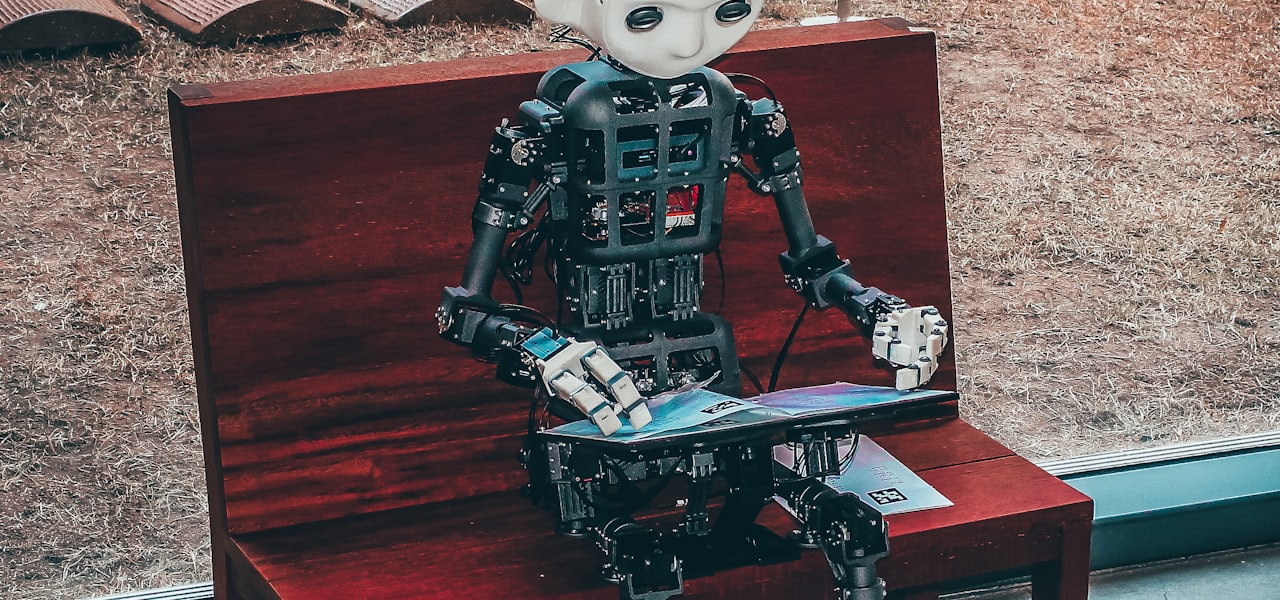
In the field of artificial intelligence (AI), a hallucination or artificial hallucination (also called bullshitting, confabulation, or delusion) is a response generated by AI that contains false or misleading information presented as fact. This term draws a loose analogy with human psychology, where a hallucination typically involves false percepts. For example, a chatbot powered by large language models (LLMs), like ChatGPT, may embed plausible-sounding random falsehoods within its generated content. Detecting and mitigating errors and hallucinations pose significant challenges for practical deployment and reliability of LLMs in high-stakes scenarios, such as chip design, supply chain logistics, and medical diagnostics. Some software engineers and statisticians have criticized the specific term "AI hallucination" for unreasonably anthropomorphizing computers. Symbolic artificial intelligence models generally do not produce hallucinations, unlike large language models. == Term == === Origin === Since the 1980s, the term "hallucination" has been used in computer vision with a positive connotation to describe the process of adding detail to an image. For example, the task of generating high-resolution face images from low-resolution inputs is called face hallucination. The first documented use of the term "hallucination" in this sense is in the PhD thesis of Eric Mjolsness in 1986. A notable work is the face hallucination algorithm by Simon Baker and Takeo Kanade published in 1999. In the 2000s, hallucinations were described in statistical machine translation as a failure mode. Since the 2010s, the term has undergone a semantic shift to signify the generation of factually incorrect or misleading outputs by AI systems in tasks like machine translation and object detection. In 2015, hallucinations were identified in visual semantic role labeling tasks by Saurabh Gupta and Jitendra Malik. In 2015, computer scientist Andrej Karpathy used the term "hallucinated" in a blog post to describe his recurrent neural network (RNN) language model generating an incorrect citation link. In 2017, Google researchers used the term to describe the responses generated by neural machine translation (NMT) models when they are not related to the source text, and in 2018, the term was used in computer vision to describe instances where non-existent objects are erroneously detected because of adversarial attacks. In July 2021, Meta warned during its release of BlenderBot 2 that the system is prone to "hallucinations", which Meta defined as "confident statements that are not true". Following OpenAI's ChatGPT release in beta version in November 2022, some users complained that such chatbots often seem to pointlessly embed plausible-sounding random falsehoods within their generated content. Many news outlets, including The New York Times, started to use the term "hallucinations" to describe these models' frequently incorrect or inconsistent responses. In 2023, the Cambridge dictionary updated its definition of hallucination to include this new sense specific to the field of AI. Some researchers have highlighted a lack of consistency in how the term is used, but also identified several alternative terms in the literature, such as confabulations, fabrications, and factual errors. === Definitions and alternatives === Uses, definitions and characterizations of the term "hallucination" in the context of LLMs include: "a tendency to invent facts in moments of uncertainty" (OpenAI, May 2023) "a model's logical mistakes" (OpenAI, May 2023) "fabricating information entirely, but behaving as if spouting facts" (CNBC, May 2023) "making up information" (The Verge, February 2023) "probability distributions" (in scientific contexts) Journalist Benj Edwards, in Ars Technica, writes that the term "hallucination" is controversial, but that some form of metaphor remains necessary; Edwards suggests "confabulation" as an analogy for processes that involve "creative gap-filling". In July 2024, a White House report on fostering public trust in AI research mentioned hallucinations only in the context of reducing them. Notably, when acknowledging David Baker's Nobel Prize-winning work with AI-generated proteins, the Nobel committee avoided the term entirely, instead referring to "imaginative protein creation". Hicks, Humphries, and Slater, in their article in Ethics and Information Technology, argue that the output of LLMs is "bullshit" under Harry Frankfurt's definition of the term, and that the models are "in an important way indifferent to the truth of their outputs", with true statements only accidentally true, and false ones accidentally false. Some researchers also use the derogatory term "botshit", often referring to uncritical use of AI. === Criticism === In the scientific community, some researchers avoid the term "hallucination", seeing it as potentially misleading. It has been criticized by Usama Fayyad, executive director of the Institute for Experimental Artificial Intelligence at Northeastern University, on the grounds that it misleadingly personifies large language models and is vague. Mary Shaw said, "The current fashion for calling generative AI's errors 'hallucinations' is appalling. It anthropomorphizes the software, and it spins actual errors as somehow being idiosyncratic quirks of the system even when they're objectively incorrect." In Salon, statistician Gary Smith argues that LLMs "do not understand what words mean" and consequently that the term "hallucination" unreasonably anthropomorphizes the machine. Murray Shanahan argues that anthropomorphic framing of LLM capabilities, including terms like "hallucination", encourages users and researchers to attribute cognitive processes to systems that operate through statistical pattern completion, and advocates for more careful linguistic practices when discussing LLM behavior. Kristina Šekrst argues that applying psychological vocabulary to LLM outputs obscures the difference between the appearance of mental properties and their genuine presence. Förster & Skop assert that tech companies use the hallucination metaphor to anthropomorphize models and deflect responsibility for non-factual outputs. Some see the AI outputs not as illusory but as prospective—that is, having some chance of being true, similar to early-stage scientific conjectures. The term has also been criticized for its association with psychedelic drug experiences. == In natural language generation == In natural language generation, there are several reasons why natural language models hallucinate: === Hallucination from data === Hallucinations can stem from incomplete, inaccurate or unrepresentative data sets. === Modeling-related causes === The pre-training of generative pretrained transformers (GPT) involves predicting the next word. It incentivizes GPT models to "give a guess" about what the next word is, even when they lack information. Some researchers take an anthropomorphic perspective and posit that hallucinations arise from a tension between novelty and usefulness. For instance, Amabile and Pratt define human creativity as the production of novel and useful ideas. By extension, a focus on novelty in machine creativity can lead to the production of original but inaccurate responses—that is, falsehoods—whereas a focus on usefulness may result in memorized content lacking originality. By 2022, newspapers such as The New York Times expressed concern that, as the adoption of bots based on large language models continued to grow, unwarranted user confidence in bot output could lead to problems. === Interpretability research === In 2025, interpretability research by Anthropic on the LLM Claude identified internal circuits that cause it to decline to answer questions unless it knows the answer. By default, the circuit is active and the LLM doesn't answer. When the LLM has sufficient information, these circuits are inhibited and the LLM answers the question. Hallucinations were found to occur when this inhibition happens incorrectly, such as when Claude recognizes a name but lacks sufficient information about that person, causing it to generate plausible but untrue responses. === Examples === On 15 November 2022, researchers from Meta AI published Galactica, designed to "store, combine and reason about scientific knowledge". Content generated by Galactica came with the warning: "Outputs may be unreliable! Language Models are prone to hallucinate text." In one case, when asked to draft a paper on creating avatars, Galactica cited a fictitious paper from a real author who works in the relevant area. Meta withdrew Galactica on 17 November due to offensiveness and inaccuracy. OpenAI's ChatGPT, released in beta version to the public on November 30, 2022, was based on the foundation model GPT-3.5 (a revision of GPT-3). Professor Ethan Mollick of Wharton called it an "omniscient, eager-to-please intern who sometimes lies to you". Data scientist Teresa Kuba
Ordered dithering
Ordered dithering is any image dithering algorithm which uses a pre-set threshold map tiled across an image. It is commonly used to display a continuous image on a display of smaller color depth. For example, Microsoft Windows uses it in 16-color graphics modes. With the most common "Bayer" threshold map, the algorithm is characterized by noticeable crosshatch patterns in the result. == Threshold map == The algorithm reduces the number of colors by applying a threshold map M to the pixels displayed, causing some pixels to change color, depending on the distance of the original color from the available color entries in the reduced palette. The first threshold maps were designed by hand to minimise the perceptual difference between a grayscale image and its two-bit quantisation for up to a 4x4 matrix. An optimal threshold matrix is one that for any possible quantisation of color has the minimum possible texture so that the greatest impression of the underlying feature comes from the image being quantised. It can be proven that for matrices whose side length is a power of two there is an optimal threshold matrix. The map may be rotated or mirrored without affecting the effectiveness of the algorithm. This threshold map (for sides with length as power of two) is also known as a Bayer matrix or, when unscaled, an index matrix. For threshold maps whose dimensions are a power of two, the map can be generated recursively via: M 2 n = 1 ( 2 n ) 2 [ 4 M n 4 M n + 2 J n 4 M n + 3 J n 4 M n + J n ] = J 2 ⊗ M n + 1 n 2 M 2 ⊗ J n , {\displaystyle \mathbf {M} _{2n}={\frac {1}{(2n)^{2}}}{\begin{bmatrix}4\mathbf {M} _{n}&4\mathbf {M} _{n}+2\mathbf {J} _{n}\\4\mathbf {M} _{n}+3\mathbf {J} _{n}&4\mathbf {M} _{n}+\mathbf {J} _{n}\end{bmatrix}}=\mathbf {J} _{2}\otimes \mathbf {M} _{n}+{\frac {1}{n^{2}}}\mathbf {M} _{2}\otimes \mathbf {J} _{n},} where J n {\displaystyle \mathbf {J} _{n}} are n × n {\displaystyle n\times n} matrices of ones and ⊗ {\displaystyle \otimes } is the Kronecker product. While the metric for texture that Bayer proposed could be used to find optimal matrices for sizes that are not a power of two, such matrices are uncommon as no simple formula for finding them exists, and relatively small matrix sizes frequently give excellent practical results (especially when combined with other modifications to the dithering algorithm). This function can also be expressed using only bit arithmetic: M(i, j) = bit_reverse(bit_interleave(bitwise_xor(i, j), i)) / n ^ 2 == Pre-calculated threshold maps == Rather than storing the threshold map as a matrix of n {\displaystyle n} × n {\displaystyle n} integers from 0 to n 2 {\displaystyle n^{2}} , depending on the exact hardware used to perform the dithering, it may be beneficial to pre-calculate the thresholds of the map into a floating point format, rather than the traditional integer matrix format shown above. For this, the following formula can be used: Mpre(i,j) = Mint(i,j) / n^2 This generates a standard threshold matrix. for the 2×2 map: this creates the pre-calculated map: Additionally, normalizing the values to average out their sum to 0 (as done in the dithering algorithm shown below) can be done during pre-processing as well by subtracting 1⁄2 of the largest value from every value: Mpre(i,j) = Mint(i,j) / n^2 – 0.5 maxValue creating the pre-calculated map: == Algorithm == The ordered dithering algorithm renders the image normally, but for each pixel, it offsets its color value with a corresponding value from the threshold map according to its location, causing the pixel's value to be quantized to a different color if it exceeds the threshold. For most dithering purposes, it is sufficient to simply add the threshold value to every pixel (without performing normalization by subtracting 1⁄2), or equivalently, to compare the pixel's value to the threshold: if the brightness value of a pixel is less than the number in the corresponding cell of the matrix, plot that pixel black, otherwise, plot it white. This lack of normalization slightly increases the average brightness of the image, and causes almost-white pixels to not be dithered. This is not a problem when using a gray scale palette (or any palette where the relative color distances are (nearly) constant), and it is often even desired, since the human eye perceives differences in darker colors more accurately than lighter ones, however, it produces incorrect results especially when using a small or arbitrary palette, so proper normalization should be preferred. In other words, the algorithm performs the following transformation on each color c of every pixel: c ′ = n e a r e s t _ p a l e t t e _ c o l o r ( c + r × ( M ( x mod n , y mod n ) − 1 / 2 ) ) {\displaystyle c'=\mathrm {nearest\_palette\_color} {\mathopen {}}\left(c+r\times \left(M(x{\bmod {n}},y{\bmod {n}})-1/2\right){\mathclose {}}\right)} where M(i, j) is the threshold map on the i-th row and j-th column, c′ is the transformed color, and r is the amount of spread in color space. Assuming an RGB palette with 23N evenly distanced colors where each color (a triple of red, green and blue values) is represented by an octet from 0 to 255, one would typically choose r ≈ 255 N {\textstyle r\approx {\frac {255}{N}}} . (1⁄2 is again the normalizing term.) Because the algorithm operates on single pixels and has no conditional statements, it is very fast and suitable for real-time transformations. Additionally, because the location of the dithering patterns always stays the same relative to the display frame, it is less prone to jitter than error-diffusion methods, making it suitable for animations. Because the patterns are more repetitive than error-diffusion method, an image with ordered dithering compresses better. Ordered dithering is more suitable for line-art graphics as it will result in straighter lines and fewer anomalies. The values read from the threshold map should preferably scale into the same range as the minimal difference between distinct colors in the target palette. Equivalently, the size of the map selected should be equal to or larger than the ratio of source colors to target colors. For example, when quantizing a 24 bpp image to 15 bpp (256 colors per channel to 32 colors per channel), the smallest map one would choose would be 4×2, for the ratio of 8 (256:32). This allows expressing each distinct tone of the input with different dithering patterns. === A variable palette: pattern dithering === == Non-Bayer approaches == The above thresholding matrix approach describes the Bayer family of ordered dithering algorithms. A number of other algorithms are also known; they generally involve changes in the threshold matrix, which changes the distribution of the "noise" introduced by all kinds of dithering (the difference between the original image and the dithered image). === Halftone === Halftone dithering performs a form of clustered dithering, creating a look similar to halftone patterns, using a specially crafted matrix. === Void and cluster === The Void and cluster algorithm uses a pre-generated blue noise as the matrix for the dithering process. The blue noise matrix keeps the Bayer's good high frequency content, but with a more uniform coverage of all the frequencies involved shows a much lower amount of patterning. The "voids-and-cluster" method gets its name from the matrix generation procedure, where a black image with randomly initialized white pixels is gaussian-blurred to find the brightest and darkest parts, corresponding to voids and clusters. After a few swaps have evenly distributed the bright and dark parts, the pixels are numbered by importance. It takes significant computational resources to generate the blue noise matrix: on a modern computer a 64×64 matrix requires a couple seconds using the original algorithm. This algorithm can be extended to make animated dither masks which also consider the axis of time. This is done by running the algorithm in three dimensions and using a kernel which is a product of a two-dimensional gaussian kernel on the XY plane, and a one-dimensional Gaussian kernel on the Z axis. === Simulated Annealing === Simulated annealing can generate dither masks by starting with a flat histogram and swapping values to optimize a loss function. The loss function controls the spectral properties of the mask, allowing it to make blue noise or noise patterns meant to be filtered by specific filters. The algorithm can also be extended over time for animated dither masks with chosen temporal properties.
Agent-assisted automation
Agent-assisted automation is a type of call center technology that automates elements of what the call center agent 1) does with his/her desktop tools and/or 2) says to customers during the call using pre-recorded audio. It is a relatively new category of call center technology that shows promise in improving call center productivity and compliance. == Types of agent-assisted automation == === Pre-recorded audio === Pre-recorded audio (sometimes referred to as soundboard (computer program) or as soundboard technology) is another form of agent-assisted automation. The purpose of using pre-recorded messages is to increase the probability (and in some cases error-proof the process so) that the right information is provided to customers at the right time. The required disclosures are pre-recorded to ensure accuracy and understandability. By integrating the recordings with the customer relationship management software, the right combination of disclosures can be played based on the combination of goods and services the customer purchased. The integration with the customer relationship management software also ensures that the order cannot be submitted until the disclosures are played, essentially error-proofing (poka-yoke) the process of ensuring the customer gets all the required consumer protection information. Phone surveys are ideal applications of this technology. Whether surveying market preferences or political views, the pre-recorded audio with an agent listening allows the questions to be asked in the same way every time, uninfluenced by the agents' fatigue levels, accents, or their own views. === Fraud prevention === Fraud prevention is a specialized type of agent-assisted automation focused on reducing ID theft and credit card fraud. ID theft and credit card fraud are huge threats for call centers and their customers and few good solutions exist, but new agent-assisted automation solutions are producing promising results. The technology allows the agents to remain on the phone while the customers use their phone key pads to enter the information. The tones are masked and the information passes directly into the customer relationship management system or payment gateway in the case of credit card transactions. The automation essentially makes it impossible for call center agents and also call center personnel that might be monitoring the calls to steal the credit card number, social security number, or other personally identifiable information. === Outbound telemarketing === Another specialized application space of agent-assisted automation is in outbound telemarketing, which goes under numerous headings including outbound prospecting, cold calling, solicitation, fund-raising, etc. Turnover is high among agents engaged in this kind of work because the task is tedious and emotionally difficult. It is tedious because the agent spends the bulk of their day, not talking to qualified leads, but in getting wrong numbers and answering machines. == Benefits == Just as automation has benefited manufacturing by reducing the mental and physical effort required of workers while simultaneously improving throughput, quality, and safety, agent-assisted automation is improving call center results while reducing the tiring aspects of the job for agents. In some cases, the agent-assisted automation streamlines the process and allows calls to be handled more quickly. By eliminating cutting and pasting from one application to another, by auto-navigating applications, and by providing a single view of the customer, agent-assisted automation can reduce call handle time and increase agent productivity. Second, in theory, the more steps that can be automated and the more logic that can be built into the call flow (e.g., if the customer buys items 2 and 9, then disclosures a, c, and f are read by the pre-recorded audio), then companies may be able to reduce the amount of training that is required of the agents while at the same time ensuring more consistency and accuracy. However, no published studies have reported this result yet. But an even larger problem in call centers is between-agent variation in behavior and results. Agents differ in the amount of training and coaching they receive, they differ in the amount of experience they have, their jobs are repetitious and tiring, and the process and procedures the agents are supposed to follow constantly change. Moreover, there are significant individual differences between agents in their intelligence, personality, motivations, etc. which all affect performance. Despite the large amount of money call centers have spent over decades trying to reduce between-agent variation, the problem is still so prevalent that one large study of customer interactions with call centers found that a customer's experience was completely a function of the quality of the agent who happened to answer the phone. Therefore, the most significant benefit of agent-assisted automation may prove to be in how the automation error-proofs or poka-yoke the process and ensures that something that needs to be done or said happens every time. Properly implemented, the between-agent variation for whatever step of the process the automation is applied to may be able to be reduced to near zero. This is especially important in a collection agency whose processes and procedures are closely regulated by the Fair Debt Collection Practices Act.
Bitstrips
Bitstrips, Inc. was a Canadian media and technology company based in Toronto, founded in 2007 by Jacob Blackstock, David Kennedy, Shahan Panth, Dorian Baldwin, and Jesse Brown. The company created and offered a web application, Bitstrips.com, which allowed users to create comic strips using personalized avatars, and preset templates and poses. Brown and Blackstock explained that the service was meant to enable self-expression without the need to have artistic skills. Bitstrips was first presented in 2008 at South by Southwest in Austin, Texas, and the service later piloted and launched a version designed for use as educational software. The service achieved increasing prominence following the launch of versions for Facebook and mobile platforms. In 2014, Bitstrips launched a spin-off app known as Bitmoji, which allows users to create personalized stickers for use in instant messaging. In July 2016, Snapchat Inc. announced that it had acquired the company; the Bitstrips comic service was shut down, but Bitmoji remains operational, and has subsequently been given greater prominence within Snapchat's overall platform. == History == Bitstrips was co-developed by Toronto-based comic artist Jacob Blackstock and his high school friend, journalist Jesse Brown. The service was originally envisioned as a means to allow anyone to create their own comic strip without needing artistic skills. Brown explained that "it's so difficult and time-consuming to tell a story in comic book form, drawing the same characters again and again in these tiny little panels, and just the amount of craftsmanship required. And even if you can do it well, which I never could, it takes years to make a story." Brown stated that the service would be "groundwork for a whole new way to communicate", and went as far as describing the service as being a "YouTube for comics". Blackstock explained that the concept of Bitstrips was influenced by his own use of comics as a form of socialization; a student, Blackstock and his friends drew comics featuring each other and shared them during classes. He felt that Bitstrips was a "medium for self-expression", stating that "It's not just about you making the comics, but since you and your friends star in these comics, it's like you're the medium. The visual nature of comics just speaks so much louder than text." The service was publicly unveiled at South by Southwest in 2008. In 2009, the service introduced a version oriented towards the educational market, Bitstrips for Schools, which was initially piloted at a number of schools in Ontario. The service was praised by educators for being engaging to students, especially within language classes. Brown noted that students were using the service to create comics outside of class as well, stating that it was "so gratifying and shocking what people do with your tool to make their own stories in ways that you never would have anticipated. Some of them are just brilliant." In December 2012, Bitstrips launched a version for Facebook; by July 2013, Bitstrips had 10 million unique users on Facebook, having created over 50 million comics. In October 2013, Bitstrips launched a mobile app; in two months, Bitstrips became a top-downloaded app in 40 countries, and over 30 million avatars had been created with it. In November 2013, Bitstrips secured a round of funding from Horizons Ventures and Li Ka-shing. In October 2014, Bitstrips launched Bitmoji, a spin-off app that allows users to create stickers featuring Bitstrips characters in various templates. In July 2016, following unconfirmed reports earlier in the year, Snapchat Inc. announced that it had acquired Bitstrips. The company's staff continue to operate out of Toronto, but the original Bitstrips comic service was shut down in favour of focusing exclusively on Bitmoji, leaving many Bitstrips users to call for a reboot of the comic service.
Escapex
Escapex, stylized as escapex, was a mobile app developer specializing in white-label fan engagement apps for celebrities. It was founded by Sephi Shapira in 2014 and has raised $18 million in funding. It allows celebrities to reach fans directly, as well as receiving revenue from fans through its freemium model. == Overview == Shapira is Israeli and previously founded Interchan and MassiveImpact. He graduated from Ben-Gurion University of the Negev. The company has raised $18 million in funding. Its 2018 revenue was $5.5 million. In 2016, the company had 57 employees split between Tel Aviv and New York City. The company's General Manager is Joe Cuello, formerly an executive at MTV, then Chief Creative Officer at TuneCore. Their director of social engagement is Rafe Lopresti-Oakes. A press release from the company described the service as having a "proprietary loyalty program" which allows "monetization of social engagement through e-commerce and in-app advertising". App launches typically offered a contest for one fan to meet the celebrity. The app also allows Escapex to collect and monetize user profiles for advertising. The New York Times described the concept of Escapex, musing, "If people love you, why not make money from them?". == Notable apps == The company has created over 350 applications, including: Enrique Iglesias, June 2016 or earlier Akon, June 2016 or earlier Ricky Martin, June 2016 or earlier Rohan Marley and the Bob Marley estate, February 2017 Marc Anthony, March 2017 Prince Royce, March 2017 Jeremy Renner, March 2017, making over $35,000 per month in April 2019 Galen Gering, June 2017 Yandel, June 2017 Greg Vaughan, June 2017 Jason Thompson, June 2017 Niecy Nash, September 2017 Tyler Posey, September 2017 Osric Chau, January 2018 Chris D'Elia Alessandra Ambrosio, making over $35,000 per month in April 2019 Abigail Ratchford, making over $35,000 per month in April 2019 Amber Rose, making over $35,000 per month in April 2019 Dita Von Teese Tommy Chong === Bollywood stars === Escapex has a large roster of Bollywood celebrities, including: Sunny Leone, December 2016 Remo D'Souza, January 2017 Amy Jackson, March 2017 Kajal Aggarwal, March 2017 Nargis Fakhri, April 2017 Disha Patani Sonam Kapoor Salman Khan == Jeremy Renner app == Renner released a mobile app called "Jeremy Renner" (Android) and "Jeremy Renner Official" (iOS) in March 2017. FastCompany wrote extensively about Renner's app in April 2019, calling it "a surprising new kind of social media". The Ringer's Kate Knibbs, explaining how self-referential the app is, summarized it stating "Jeremy Renner’s Jeremy Renner app is the Jeremy Renner of apps." The community developed to include memes, selfies, and a "Happy Rennsday" event on Wednesdays. As early as October 2017 there were claims of censorship, bullying, and "contest-rigging". In September 2019, comedian Stefan Heck wrote about discovering that any replies through the app would appear as if they were sent by Renner himself in push notifications. Heck wrote about notifications making it appear Renner was a big enthusiast of "porno"; other users made it appear Renner was a big fan of Casey Anthony. Renner had to ask Escapex to shut down the app the following day, stating "The app has jumped the shark. Literally." In September 2020, comedian/writer Caroline Goldfarb and actress Sarah Ramos launched The Renner Files podcast, a six-part series investigating the Jeremy Renner app.
Reconstruction from projections
The problem of reconstructing a multidimensional signal from its projection is uniquely multidimensional, having no 1-D counterpart. It has applications that range from computer-aided tomography to geophysical signal processing. It is a problem which can be explored from several points of view—as a deconvolution problem, a modeling problem, an estimation problem, or an interpolation problem. == Motivation and applications == Many fields in science and engineering use reconstruction from projections, especially in imaging. It is widely applied geophysical tomography, medical imaging and industrial radiography. For example, in a CT scanner, the 3D structure of the patient’s body being scanned is measured with beams going through the tissue and hitting a detector, giving a flat projection of the body from that angle. Multiple projections are put together to get an image of the position and shape of structures inside in 3D. == Problem statement and basics == A projection is a linear mapping of an M {\displaystyle M} dimensional signal into an N {\displaystyle N} dimensional one, where N ≤ M {\displaystyle N\leq M} . And the objective of reconstruction is to restore the M {\displaystyle M} dimensional signal based on the N {\displaystyle N} dimensional signal. The following case is a 2-D signal projected into 1D signal. The signal in the original coordinate is denoted as d ( u , v ) {\displaystyle d(u,v)} . Now consider a collimated beam of radiation coming from the opposite orientation of v ^ {\displaystyle {\hat {v}}} , producing a projection along u ^ {\displaystyle {\hat {u}}} . v ^ {\displaystyle {\hat {v}}} and u ^ {\displaystyle {\hat {u}}} are normal to each other, and the angle between u {\displaystyle u} and u ^ {\displaystyle {\hat {u}}} is theta. The signal obtained along u ^ {\displaystyle {\hat {u}}} axis is defined to be p θ ( u ^ ) {\displaystyle p_{\theta }({\hat {u}})} . The relationship between the original coordinate and the rotated coordinate is given by [ u ^ v ^ ] = [ cos θ sin θ − sin θ cos θ ] [ u v ] {\displaystyle {\begin{bmatrix}{\hat {u}}\\{\hat {v}}\end{bmatrix}}={\begin{bmatrix}\cos \theta &\sin \theta \\-\sin \theta &\cos \theta \end{bmatrix}}{\begin{bmatrix}u\\v\end{bmatrix}}} or inversely, [ u v ] = [ cos θ − sin θ sin θ cos θ ] [ u ^ v ^ ] {\displaystyle {\begin{bmatrix}u\\v\end{bmatrix}}={\begin{bmatrix}\cos \theta &-\sin \theta \\\sin \theta &\cos \theta \end{bmatrix}}{\begin{bmatrix}{\hat {u}}\\{\hat {v}}\end{bmatrix}}} Then we have p θ ( u ^ ) = ∫ − ∞ ∞ d ( u , v ) d v ^ = ∫ − ∞ ∞ d ( u ^ cos ( θ ) − v ^ sin ( θ ) , u ^ sin ( θ ) + v ^ cos ( θ ) ) d v ^ {\displaystyle p_{\theta }({\hat {u}})=\int _{-\infty }^{\infty }d(u,v)\,\mathrm {d} {\hat {v}}=\int _{-\infty }^{\infty }d({\hat {u}}\cos(\theta )-{\hat {v}}\sin(\theta ),{\hat {u}}\sin(\theta )+{\hat {v}}\cos(\theta ))\,\mathrm {d} {\hat {v}}} By varying theta, a large number of projections can be obtained. Given the projection-slice theorem, D ( Ω , θ ) {\displaystyle D(\Omega ,\theta )} ,the slice of the Fourier transform of d ( u , v ) {\displaystyle d(u,v)} at angle theta, is equivalent to P θ ( Ω ) {\displaystyle P_{\theta }(\Omega )} , the Fourier Transform of the projection p θ ( u ^ ) {\displaystyle p_{\theta }({\hat {u}})} . Therefore, the unknown d ( u , v ) {\displaystyle d(u,v)} can be obtained from its Fourier transform by means of the Fourier transform inversion integral d ( u , v ) = 1 4 π 2 ∫ − ∞ ∞ ∫ − ∞ ∞ D ( Ω 1 , Ω 2 ) e j Ω 1 u e j Ω 2 v d Ω 1 , Ω 2 {\displaystyle \mathrm {d} (u,v)={\frac {1}{4\pi ^{2}}}\int _{-\infty }^{\infty }\int _{-\infty }^{\infty }D(\Omega _{1},\Omega _{2})e^{j\Omega _{1}u}e^{j\Omega _{2}v}\,\mathrm {d} \Omega _{1},\Omega _{2}} = 1 4 π 2 ∫ 0 ∞ ∫ − π π D ( Ω , θ ) e j Ω u cos ( θ ) e j Ω v s i n θ | Ω | d Ω d θ {\displaystyle ={\frac {1}{4\pi ^{2}}}\int _{0}^{\infty }\int _{-\pi }^{\pi }D(\Omega ,\theta )e^{j\Omega u\cos(\theta )}e^{j\Omega vsin\theta }{\begin{vmatrix}\Omega \end{vmatrix}}\,\mathrm {d} \Omega \mathrm {d} \theta } = 1 4 π 2 ∫ − π π ∫ 0 ∞ P θ ( Ω ) e j Ω ( u cos θ + v sin θ ) | Ω | d Ω d θ {\displaystyle ={\frac {1}{4\pi ^{2}}}\int _{-\pi }^{\pi }\int _{0}^{\infty }P_{\theta }(\Omega )e^{j}\Omega (u\cos \theta +v\sin \theta ){\begin{vmatrix}\Omega \end{vmatrix}}\,\mathrm {d} \Omega \mathrm {d} \theta } = 1 4 π 2 ∫ 0 π ( ∫ − ∞ ∞ P θ ( Ω ) | Ω | {\displaystyle ={\frac {1}{4\pi ^{2}}}\int _{0}^{\pi }(\int _{-\infty }^{\infty }P_{\theta }(\Omega ){\begin{vmatrix}\Omega \end{vmatrix}}} e j Ω u ^ d Ω ) d θ {\displaystyle e^{j\Omega {\hat {u}}}\mathrm {d} \Omega )\mathrm {d} \theta } By taking the inverse Fourier Transform and assuming g ( u ^ ) = F − 1 ( | Ω | 2 ) {\displaystyle g({\hat {u}})={\mathcal {F}}^{-1}({{\begin{vmatrix}\Omega \end{vmatrix}}^{2}})} , we get d ( u , v ) = ∑ i △ θ i [ p θ ( u ^ ) ∗ g θ i ( u ^ ) ] {\displaystyle d(u,v)=\sum _{i}\vartriangle \theta _{i}[p_{\theta }({\hat {u}})g_{\theta i}({\hat {u}})]} == Approaches == In practice, there are a wide variety of methods that are utilized, most of which are reconstruct 3-D information (volume) from 2-D signals (image). Typically used methods are CT, MRI, PET and SPECT. And the filtered back projection based on the principles introduced above are commonly applied. === Computed Tomography (CT) === In CT, a volume is formed by stacking the axial slices. The software cuts the volume in a different plane (usually orthogonal). Commonly, slice data is generated using an X-ray source that rotates around the object. X-ray sensors are positioned on the opposite side of the circle from the X-ray source. === Magnetic resonance imaging (MRI) === In MRI, energy from an oscillating magnetic field is temporarily applied to the patient at the appropriate resonance frequency. The protons (hydrogen atoms) emit a radio frequency signal which is measured by a receiving coil. The radio signal can be made to encode position information by varying the main magnetic field using gradient coils. === Positron emission tomography (PET) === The system detects pairs of gamma rays emitted indirectly by a positron-emitting radionuclide (tracer), which is introduced into the body on a biologically active molecule. Three-dimensional images of tracer concentration within the body are then constructed by computer analysis. In modern PET-CT scanners, three dimensional imaging is often accomplished with the aid of a CT X-ray scan performed on the patient during the same session, in the same machine. === Single-photon emission computed tomography (SPECT) === SPECT imaging is performed by using a gamma camera to acquire multiple 2-D images (projections) from multiple angles. Multiple projections are used to yield a 3-D data set. This data set may then be manipulated to show thin slices along any chosen axis of the body. SPECT is similar to PET in its use of radioactive tracer material and detection of gamma rays, while the tracers used in SPECT emit gamma radiation that is measured more directly.