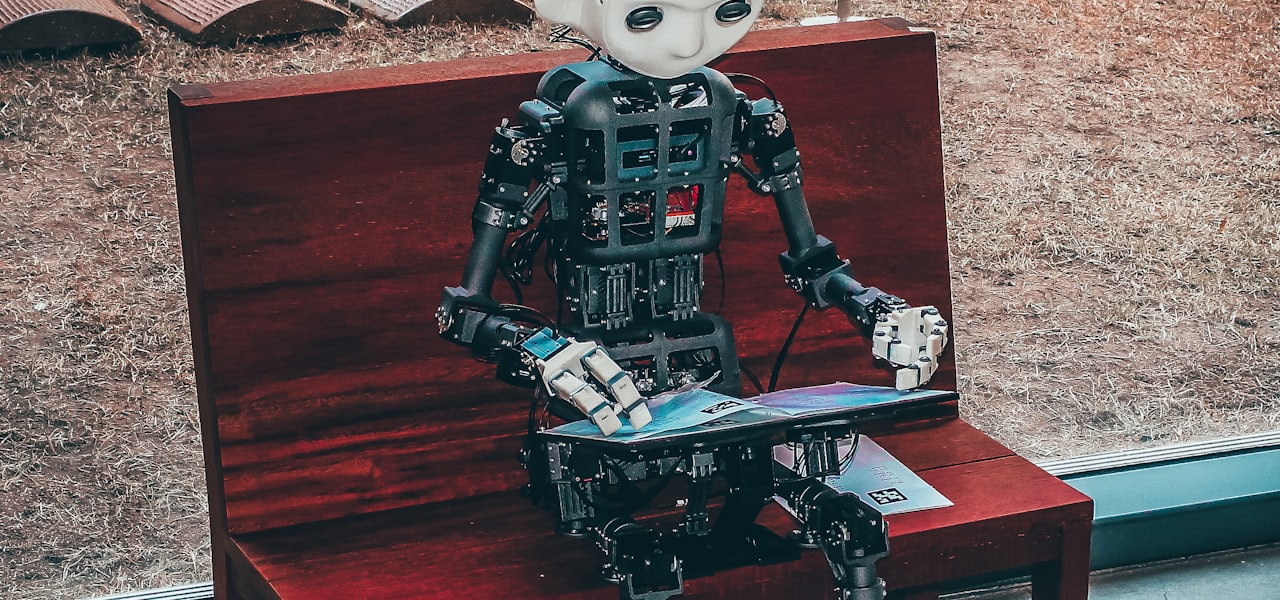
Gallery software is software that helps the user publish or share photos, pictures, videos or other digital media. Most galleries are located on Web servers, where users are allowed to register and publish their pictures. Gallery software usually features automatic image resizing, allows digital media be categorized into sets, and allows comments. == Types == Early digital media publishing and sharing was done with imageboards. The boards are by topics, sometimes called "chan". Each discussion in a "chan" are started with a piece of digital media, and follow-up discussions can contain another piece too. Software works in this way: Futallaby, Danbooru. Traditionally, galleries are managed. An administrator maintains a set of or hierarchy of albums. The users can upload their digital media in one of the existing albums defined by an administrator, or create their own albums. The users with sufficient permission can re-categorise the digital media others uploaded. Often, the site's administrator can define which album the users are allowed to categorise their media into, or delete other user's content. Examples are open source galleries Coppermine, Gallery Project. There are decentralised gallery software that does not have an administrator for managing contents. Pinterest, Flickr and DeviantArt has been successful with this model. Open source gallery software MediaGoblin works in this way. Each user can create their own "collections", to categorise theirs or other users' media. However users cannot put media into other user's collections. Each user's category is separate. There is no centralised theme or hierarchy for the media.
Discovery system (artificial intelligence)
A discovery system is an artificial intelligence system that attempts to discover new scientific concepts or laws. The aim of discovery systems is to automate scientific data analysis and the scientific discovery process. Ideally, an artificial intelligence system should be able to search systematically through the space of all possible hypotheses and yield the hypothesis - or set of equally likely hypotheses - that best describes the complex patterns in data. During the era known as the second AI summer (approximately 1978–1987), various systems akin to the era's dominant expert systems were developed to tackle the problem of extracting scientific hypotheses from data, with or without interacting with a human scientist. These systems included Autoclass, Automated Mathematician, Eurisko, which aimed at general-purpose hypothesis discovery, and more specific systems such as Dalton, which uncovers molecular properties from data. The dream of building systems that discover scientific hypotheses was pushed to the background with the second AI winter and the subsequent resurgence of subsymbolic methods such as neural networks. Subsymbolic methods emphasize prediction over explanation, and yield models which works well but are difficult or impossible to explain which has earned them the name black box AI. A black-box model cannot be considered a scientific hypothesis, and this development has even led some researchers to suggest that the traditional aim of science - to uncover hypotheses and theories about the structure of reality - is obsolete. Other researchers disagree and argue that subsymbolic methods are useful in many cases, just not for generating scientific theories. == Discovery systems from the 1970s and 1980s == Autoclass was a Bayesian Classification System written in 1986 Automated Mathematician was one of the earliest successful discovery systems. It was written in 1977 and worked by generating a modifying small Lisp programs Eurisko was a Sequel to Automated Mathematician written in 1984 Dalton is a still maintained program capable of calculating various molecular properties initially launched in 1983 and available in open source since 2017 Glauber is a scientific discovery method written in the context of computational philosophy of science launched in 1983 == Modern discovery systems (2009–present) == After a couple of decades with little interest in discovery systems, the interest in using AI to uncover natural laws and scientific explanations was renewed by the work of Michael Schmidt, then a PhD student in Computational Biology at Cornell University. Schmidt and his advisor, Hod Lipson, invented Eureqa, which they described as a symbolic regression approach to "distilling free-form natural laws from experimental data". This work effectively demonstrated that symbolic regression was a promising way forward for AI-driven scientific discovery. Since 2009, symbolic regression has matured further, and today, various commercial and open source systems are actively used in scientific research. Notable examples include Eureqa, now a part of DataRobot AI Cloud Platform, AI Feynman, and QLattice.
UpScrolled
UpScrolled is an Australian social media platform for microblogging and short-form online video sharing that was launched in June 2025 by Recursive Methods Pty Ltd. It was founded by Issam Hijazi. == History == UpScrolled was launched in June 2025 by Recursive Methods Pty Ltd. It was founded by Issam Hijazi, a Palestinian-Australian app developer. UpScrolled is backed by the Tech for Palestine incubator. In January 2026, UpScrolled saw increased attention and number of downloads after the acquisition of TikTok by a group of pro-Donald Trump US investors, including Larry Ellison, which led to calls to boycott TikTok and migrate to other apps. TikTok was alleged to be suppressing pro-Palestinian content, as well as news surrounding the killing of Alex Pretti in Minneapolis on the platform. UpScrolled subsequently climbed to the top 10 of Apple's App Store list of free apps. The app saw a reported 2,850% increase in downloads between 22 and 24 January 2026. As of 27 January 2026, UpScrolled "had been downloaded about 400,000 times in the US and 700,000 globally since launching in June 2025". The app became the most downloaded app in the Apple App store on 29 January 2026, following allegations that TikTok was suppressing videos and content opposed to Immigration and Customs Enforcement (ICE) under its new ownership. By 2 February 2026, UpScrolled had reached 2.5 million users. According to the Google Play Store and the Apple App Store, it has become the most downloaded social media app in the United States and Canada, with rising interest in the United Kingdom, France, Germany and Italy. On 14 February, UpScrolled was suspended from the Google Play Store; the suspension was reverted by 15 February. == Founder == Hijazi was born in Jordan. His parents and grandparents are from Safad, a northern Israeli city near the Lebanese border. He worked for IBM and Oracle prior to starting UpScrolled. Hijazi told Rest of World that he launched UpScrolled in response to Israel's genocide in Gaza which followed the October 7 attacks. He said, "I couldn't take it anymore. I lost family members in Gaza, and I didn't want to be complicit. So I was like, I'm done with this, I want to feel useful. I found this gap in the market, with a lot of people asking why there is no alternative to the Big Tech platforms for their content, which was getting censored." Hijazi also alleges that social media accounts that were posting pro-Palestinian content were getting shadow banned on larger platforms, and alleges that even his account was not exempt from being targeted by censors. Hijazi has further elaborated on the importance of social media independence to further the Palestinian cause. In January 2026, Web Summit Qatar announced that Hijazi would be an opening night speaker. Following the announcement, there was a surge in ticket sales for the summit. Hijazi lives in Sydney with his wife and daughter. He lost 60 family members during the Gaza war. == Features == UpScrolled's algorithm allows users to discover posts based on likes, comments, and shares with time decay and some randomness, all chronologically, with "no manipulation" according to the app's website. UpScrolled has an interface resembling a mix of Instagram and Twitter, allowing users to post and view text posts, photos, and videos. It also lets users send private messages to each other. The app is currently available for iOS and Android devices, with plans to upscale. UpScrolled does not include Israel as an option in its location selection menu. Cities such as Tel Aviv are included under "Occupied Territories of Palestine", and Palestine can also be set as the location. UpScrolled says that it is against censorship and shadow banning, and describes itself as "belong[ing] to the people who use it — not to hidden algorithms or outside agendas". Hijazi said, "The other platforms claim to be free speech platforms. But when it comes to anything on Palestine, that's a different story." UpScrolled states that it "does not tolerate hate speech, propaganda, or bad-faith behaviour, but it also refuses to silence voices quietly or without explanation". == User base and content == Al Jazeera reported that posts expressing pro-Palestinian sentiment or depicting the continued suffering in the Gaza Strip were "flooding" the app. Political and global issues such as the Gaza war are prominent. Content includes updates from the Gaza Freedom Flotilla, posts by doctors working in Gaza, video essays about Palantir’s influence within the military and calls for boycotts of Israel. It has been used by Gazans to crowdfund and record daily life. Celebrity users of UpScrolled include American labour activist Chris Smalls and actor Jacob Berger, both of whom were on the July 2025 Gaza Freedom Flotilla. Political figures have also joined UpScrolled, such as South African politician and Economic Freedom Fighters leader Julius Malema, and Islamic Revolutionary Guard Corps commander Esmail Qaani. One user said that most early users were attracted to the platform for the opportunity to criticize Zionism. The Jewish Telegraphic Agency (JTA) reported that UpScrolled was observed to be "flooded" with antisemitic and anti-Israel content, including Holocaust denial and accusations that Israel carried out the 9/11 attacks. In a statement, UpScrolled said, "Our content moderation hasn't been able to keep up with the massive rise of users this week. We're working with digital rights experts to grow our Trust & Safety team and are beefing up our content moderation to prevent this. We apologise to all impacted users, thank you for being part of Upscrolled." The Times reported in February 2026 that UpScrolled was hosting content that could potentially breach UK law, including antisemitic content and posts promoting Hamas, Hezbollah, Islamic State and Al-Qaeda, as well as footage of the 2019 Christchurch mosque shootings and content praising the perpetrators of the 2019 Halle synagogue shooting and 2018 Pittsburgh synagogue shooting. Antisemitic influencers Lucas Gage, Jake Shields, Stew Peters and Anastasia Maria Loupis have accounts on UpScrolled. UpScrolled’s policies prohibit threats, glorification of harm or support for terrorist or violent groups. Hijazi said harmful content was being uploaded to UpScrolled and the company had expanded its content moderation team and upgraded its technology infrastructure to deal with the issue. In May 2026, Moment magazine said that users had identified some antisemitic content, pornography and extremist videos on the platform. The magazine said there were gaps in content moderation due to the small size of the developer team. == Reception == In January 2026, the Council on American–Islamic Relations (CAIR) praised UpScrolled for "pledging to protect the free flow of ideas on its platform, including both support for and opposition to the Israeli government's human rights abuses." Guy Christensen, a pro-Palestinian social media celebrity, has encouraged his audience to download UpScrolled. Christensen characterized UpScrolled as having "no censorship, no ownership by billionaires who put their interests and biases onto you to control you". He compared the platform to others like TikTok, saying that Israel is behind censorship that wouldn't happen on UpScrolled. Jaigris Hodson, an associate professor of Interdisciplinary Studies at Royal Roads University in Canada, has argued that "Network effects mean that unless UpScrolled continues its explosive growth, people are unlikely to continue to choose it over the more established TikTok. At best, we might see a Twitter/X effect, which is where TikTok will host more pro-U.S. government content creators and those people who want to follow them, and UpScrolled will host more critical content creators and their followers."
International Medical Education Directory
The International Medical Education Directory (IMED) was a public database of worldwide medical schools. The IMED was published as a joint collaboration of the Educational Commission for Foreign Medical Graduates (ECFMG) and the Foundation for Advancement of International Medical Education and Research (FAIMER). The information available in IMED was derived from data collected by the Educational Commission for Foreign Medical Graduates (ECFMG) throughout its history of evaluating the medical education credentials of international medical graduates. Using these data as a starting point, Foundation for Advancement of International Medical Education and Research (FAIMER) began developing IMED in 2001 and made it publicly available in April 2002. In April 2014, IMED was merged with the Avicenna Directory to create the World Directory of Medical Schools. The World Directory is now the definitive list of medical schools in the world, as IMED and Avicenna were discontinued in 2015.
Generatrix
In geometry, a generatrix () or describent is a point, curve or surface that, when moved along a given path, generates a new shape. The path directing the motion of the generatrix motion is called a directrix or dirigent. == Examples == A cone can be generated by moving a line (the generatrix) fixed at the future apex of the cone along a closed curve (the directrix); if that directrix is a circle perpendicular to the line connecting its center to the apex, the motion is rotation around a fixed axis and the resulting shape is a circular cone. The generatrix of a cylinder, a limiting case of a cone, is a line that is kept parallel to some axis.
Computer-aided lean management
Computer-aided lean management, in business management, is a methodology of developing and using software-controlled, lean systems integration. Its goal is to drive innovation towards cost and cycle-time savings. It attempts to create an efficient use of capital and resources through the development and use of one integrated system model to run a business's planning, engineering, design, maintenance, and operations. == Overview == Computer-Aided Lean Management (CALM) is a management philosophy that uses software to reduce risk and inefficiencies. CALM acts on uncertainties and business inefficiencies to increase profitability through the use of computational decision-making tools that enable opportunities for additional value creation. It is based on the application of software to enable continuous improvement through an Integrated System Model (ISM) of the business’s physical assets, business processes, and machine learning. This integration of software applications using lean principles was developed in the aerospace industry and has migrated to the energy industry. The creation of an ISM removes the barriers posed by the silos or stovepipes inherent in the departmentalization of most companies. Integration enables lean uses of information for the creation of actionable knowledge. CALM strives to create such a lean management approach to running the company through the rigors of software enforcement. From this software enforcement comes clear policy and procedures that are adhered to, activity-based costing, measurement of effectiveness, and the capability of using advanced algorithms for dramatic improvements in optimization of resources. CALM creates business capabilities through software to enable technology application, streamlining of processes, and a lean organizational structure. The methodology is based on a common sense approach for running a business, by measuring actions taken and using those measurements to design more efficient processes. == History == CALM was inspired by lean processes and techniques that were already dominant management technologies with a wide diversity of applications and successes. Motorola and General Electric had been known for the concepts of Six Sigma; Boeing had been managing mass (using modular and flexible assembly options), and Toyota combined elements of these methodologies to create the Toyota Production System. Boeing then took the Toyota model and added computer-aided enforcement of lean methodologies throughout the manufacturing process. One of the major sources for CALM's outgrowth was integrated definition (IDEF) modeling in aerospace manufacturing that was pioneered by the U.S. Air Force in the 1970s. IDEF is a methodology designed to model the end-to-end decisions, actions, and activities of an organization or system so that costs, performance, and cycle times can be optimized. IDEF methods have been adapted for wider use in automotive, aerospace, pharmaceuticals, and software development industries. IDEF methods serve as a starting point to understand lean management through semantic data modeling. The IDEF process begins by mapping the existing functions of an enterprise, creating a graphical model, or road map, that shows what controls each important function, who performs it, what resources are required for carrying it out, what it produces, how much it costs, and what relationships it has to other functions of the organization. IDEF simulations have been found to be efficient at streamlining and modernizing both companies and governmental agencies. Perhaps the best-developed evolution of the IDEF model beyond Toyota was at Boeing. Their project life-cycle process has grown into a rigorous software system that links people, tasks, tools, materials, and the environmental impact of any newly planned project, before any building is allowed to begin. Routinely, more than half of the time for any given project is spent building the precedence diagrams, or three-dimensional process maps, integrating with outside suppliers, and designing the implementation plan–all on the computer. Once real activity is initiated, an action tracker is used to monitor inputs and outputs versus the schedule and delivery metrics in real time throughout the organization. When the execution of a new airplane design begins, it is so well organized that it consistently cuts both costs and build time in half for each successive generation of airframe. Boeing created a complex lean management process called 'define and control airplane configuration/manufacturing resource management' (DCAC/MRM). The process was built with the help of the operations research and computer sciences departments of the University of Pittsburgh. The manufacture of the Boeing 777 was ultimately a success, and it became the precursor to succeeding generations of CALM at Boeing. The methodology of CALM has recently been applied to field orientated infrastructure based businesses with highly interdependent systems, such as electric utilities where a smart grid concept is being researched and developed. The management of infrastructure-based industries like oil, gas, electricity, water, transportation, and renewables requires massive investments in interdependent, physical infrastructure, as well as simultaneous attention to disparate market forces. In infrastructure businesses that manage field assets, uncertainty is the biggest impediment to profitability, rather than the maintenance of efficient supply chains or the management of factory assembly lines. These businesses are dominated by risk from uncertainties such as weather, market variations, transportation disruptions, government actions, logistic difficulties, geology, and asset reliability. CALM has been applied to deal with these types of infrastructure based challenges.
List of monochrome and RGB color formats
This list of monochrome and RGB palettes includes generic repertoires of colors (color palettes) to produce black-and-white and RGB color pictures by a computer's display hardware. RGB is the most common method to produce colors for displays; so these complete RGB color repertoires have every possible combination of R-G-B triplets within any given maximum number of levels per component. Each palette is represented by a series of color patches. When the number of colors is low, a 1-pixel-size version of the palette appears below it, for easily comparing relative palette sizes. Huge palettes are given directly in one-color-per-pixel color patches. For each unique palette, an image color test chart and sample image (truecolor original follows) rendered with that palette (without dithering) are given. The test chart shows the full 256 levels of the red, green, and blue (RGB) primary colors and cyan, magenta, and yellow complementary colors, along with a full 256-level grayscale. Gradients of RGB intermediate colors (orange, lime green, sea green, sky blue, violet, and fuchsia), and a full hue spectrum are also present. Color charts are not gamma corrected. These elements illustrate the color depth and distribution of the colors of any given palette, and the sample image indicates how the color selection of such palettes could represent real-life images. These images are not necessarily representative of how the image would be displayed on the original graphics hardware, as the hardware may have additional limitations regarding the maximum display resolution, pixel aspect ratio and color placement. Implementation of these formats is specific to each machine. Therefore, the number of colors that can be simultaneously displayed in a given text or graphic mode might be different. Also, the actual displayed colors are subject to the output format used - PAL or NTSC, composite or component video, etc. - and might be slightly different. For simulated images and specific hardware and alternate methods to produce colors other than RGB (ex: composite), see the List of 8-bit computer hardware palettes, the List of 16-bit computer hardware palettes and the List of video game console palettes. For various software arrangements and sorts of colors, including other possible full RGB arrangements within 8-bit color depth displays, see the List of software palettes. == Monochrome palettes == These palettes only have some shades of gray, from black to white (considered the darkest and lightest "grays", respectively). The general rule is that those palettes have 2n different shades of gray, where n is the number of bits needed to represent a single pixel. === Monochrome (1-bit grayscale) === Monochrome graphics displays typically have a black background with a white or light gray image, though green and amber monochrome monitors were also common. Such a palette requires only one bit per pixel. Where photo-realism was desired, these early computer systems had a heavy reliance on dithering to make up for the limits of the technology. In some systems, as Hercules and CGA graphic cards for the IBM PC, a bit value of 1 represents white pixels (light on) and a value of 0 the black ones (light off); others, like the Playdate and Atari ST and Apple Macintosh with monochrome monitors, a bit value of 0 means a white pixel (no ink) and a value of 1 means a black pixel (dot of ink), which it approximates to the printing logic. === 2-bit Grayscale === In a 2-bit color palette each pixel's value is represented by 2 bits resulting in a 4-value palette (22 = 4). 2-bit dithering: It has black, white and two intermediate levels of gray as follows: A monochrome 2-bit palette is used on: The Monochrome Display Adapter for the IBM PC NeXT Computer, NeXTcube and NeXTstation monochrome graphic displays. Original Game Boy system portable video game console. Macintosh PowerBook 150 monochrome LC displays. Amiga with A2024 monochrome monitor in high-resolution mode. The original Amazon Kindle The original WonderSwan The Tiger Electronics Game.com portable video game console The original Neo Geo Pocket. === 4-bit Grayscale === In a 4-bit color palette each pixel's value is represented by 4 bits resulting in a 16-value palette (24 = 16): 4-bit grayscale dithering does a fairly good job of reducing visible banding of the level changes: A monochrome 4-bit palette is used on: MOS Technology VDC (on the Commodore 128 with monochrome monitor) Amstrad CPC series with a GT64/GT65 Green Monitor (16 unique green shades) Amstrad CPC Plus series with the MM12 Monochrome monitor (16 shades of grey) Some Apple PowerBooks equipped with monochrome displays like the PowerBook 5300 The original VideoNow === 8-bit Grayscale === In an 8-bit color palette each pixel's value is represented by 8 bits resulting in a 256-value palette (28 = 256). This is usually the maximum number of grays in ordinary monochrome systems; each image pixel occupies a single memory byte. Most scanners can capture images in 8-bit grayscale, and image file formats like TIFF and JPEG natively support this monochrome palette size. Alpha channels employed for video overlay also use (conceptually) this palette. The gray level indicates the opacity of the blended image pixel over the background image pixel. == Dichrome palettes == === 16-bit RG palette === The RG or red–green color space is a color space that uses only two primary colors: red and green. It was used on early color processes for films. It was used as an additive format, similar to the RGB color model but without a blue channel, on processes such as Kinemacolor, Prizma, Technicolor I, Raycol, etc., producing shades of black, red, green and yellow. Alternatively, it was used as a subtractive format on Brewster Color I, Kodachrome I, Prizma II, Technicolor II, etc., producing shades of transparent, red, green and black. Until recently, its primary use was in low-cost light-emitting diode displays in which red and green tended to be far more common than the still nascent blue LED technology, but full-color LEDs with blue have become more common in recent years. ColorCode 3-D, a anaglyph stereoscopic color scheme, uses the RG color space to simulate a broad spectrum of color in one eye, while the blue portion of the spectrum transmits a black-and-white (black-and-blue) image to the other eye to give depth perception. === 16-bit RB palette === === 16-bit GB palette === == Regular RGB palettes == Here are grouped those full RGB hardware palettes that have the same number of binary levels (i.e., the same number of bits) for every red, green and blue components using the full RGB color model. Thus, the total number of colors are always the number of possible levels by component, n, raised to a power of 3: n×n×n = n3. === 3-bit RGB === 3-bit RGB dithering: Systems with a 3-bit RGB palette use 1 bit for each of the red, green and blue color components. That is, each component is either "on" or "off" with no intermediate states. This results in an 8-color palette ((21)3 = 23 = 8) that has black, white, the three RGB primary colors red, green and blue and their correspondent complementary colors cyan, magenta and yellow as follows: The color indices vary between implementations; therefore, index numbers are not given. The 3-bit RGB palette is used by: Text terminals following the ECMA-48 standard (sometimes known as the "ANSI standard", although ANSI X3.128 does not define colors) World System Teletext Level 1/1.5 Videotex Oric computers BBC Micro PC-8801 (up to the MkII) PC-9801 (with original 8086 CPU, before the VM/VX models) Sharp X1 (models before the X1 Turbo Z) Sharp MZ 700 FM-7, FM New 7, FM 77 (before the FM77AV) Sinclair QL Space Invaders Part II (arcade hardware) Macintosh SE (with a color printer or external monitor) Atari 2600 (SECAM version) Color Maximite (PIC32 based microcomputer) Arcadia 2001 PV-1000 Monkey Magic (arcade hardware) VIC-20 (high-res mode) Mouse Trap (arcade hardware) Sanyo MBC-550 series Windows 1.0 (includes dithering) === 6-bit RGB === Systems with a 6-bit RGB palette use 2 bits for each of the red, green, and blue color components. This results in a (22)3 = 43 = 64-color palette as follows: 6-bit RGB systems include the following: Enhanced Graphics Adapter (EGA) for IBM PC/AT (16 colors at once) Sega Master System video game console (32 colors at once) GIME for TRS-80 Color Computer 3 (16 colors at once) Pebble Time smartwatch which has a 6-bit (64 color) e-paper display Parallax Propeller using the reference VGA circuit === 9-bit RGB === Systems with a 9-bit RGB palette use 3 bits for each of the red, green, and blue color components. This results in a (23)3 = 83 = 512-color palette as follows: 9-bit RGB systems include the following: Atari ST (Normally 4 to 16 at once without tricks) MSX2 computers (up to 16 at once) Sega Genesis video game console, (64 colors at once) Sega Nomad TurboGrafx-16 (NEC PC-Engine) ZX Spectrum Next The NEC PC-88